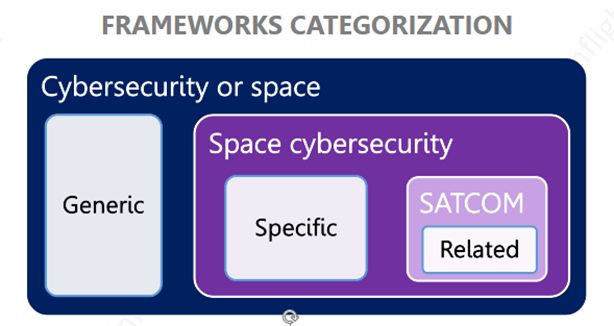
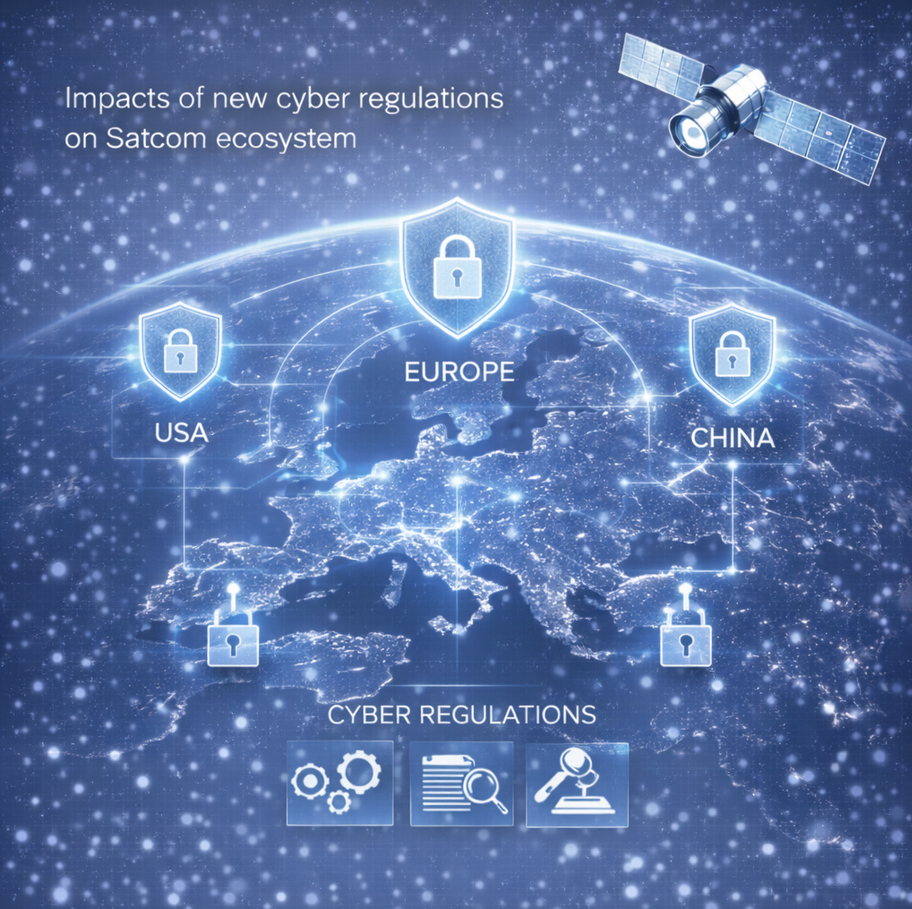
The Milestone 2 Meeting, held on December 19, 2025, allowed the CyberInflight team to present its Task 2.1, “Micro and Macro Impacts Assessment,” and Task 2.3, “Gap Analysis,” findings, which represent the core of the mission. Regarding Task 2.1 “Micro and Macro Impacts Assessment”, the purpose is to assess the effects of identified frameworks on the SATCOM ecosystem (macro) and on its players (micro). By combining micro- and macro-level impact assessment, Task 2.1 provides a comprehensive picture of the frameworks’ effects on the SATCOM ecosystem and its players. Some of the main preliminary observations from Building Blocks indicate that when creating a new framework, certain external factors play a crucial role in its adoption and success, such as openness to contributions and improvement, leveraging existing frameworks, and the precise definition of roles and responsibilities. Micro elements should also be considered, with a focus on the operational aspects of the framework, and the actionable and operational impacts it has at the player’s level. One kind of micro element can be the administrative or legal cost associated with implementing or maintaining a framework, for instance.
CyberInflight could also present its findings on Task 2.2 “Particular EU cybersecurity frameworks studies”. This task focused on particular EU cybersecurity frameworks and their impact on the SATCOM ecosystems in more detail. The purpose is to provide insights about 3 main European cybersecurity frameworks, NIS2, the to-be-released EU Space Act, and the announced German Space Act, and their micro and macro implications on the European and foreign SATCOM ecosystems, considering a specific timeframe (from 2026 to 2030). This step provides information, particularly regarding the anticipation of future impacts. As highlighted in the mission introduction, one of the main objectives of the study is to provide a clear perspective on the cybersecurity frameworks impacting SATCOM by identifying, analyzing, and comparing them. The Task 2.3 “Gap Analysis” allows to meet this objective, and notably by providing a further analysis and comparison of the frameworks. Indeed, it allows to identify the strengths and areas of improvement resulting from the existing gaps, pitfalls, or overlaps, and what is missing or what needs to be added or adapted. It also aims to draft conclusions to facilitate alignment by helping to harmonize the frameworks, when relevant, to avoid duplication and inconsistencies. Conclusions will also help prioritize improvement actions and decide how to optimize efforts. Thus, one of the actionable outcomes of the gap analysis is to clearly identify the areas to be further developed in the frameworks landscape in the coming years, so that the most SATCOM-operational frameworks are as valuable, efficient, and widely used as possible within the SATCOM ecosystem. This goes hand in hand to ensure that the mission comprehensively addresses the operational needs and constraints of the SATCOM ecosystem and provides clearactionability for those players.