
The on-board processing system is a core component of the IIMEO airborne demonstrator, enabling near real-time data analysis directly during flight operations. This means that important information can be processed almost immediately, helping users respond faster and more efficiently.
What happens on-board?
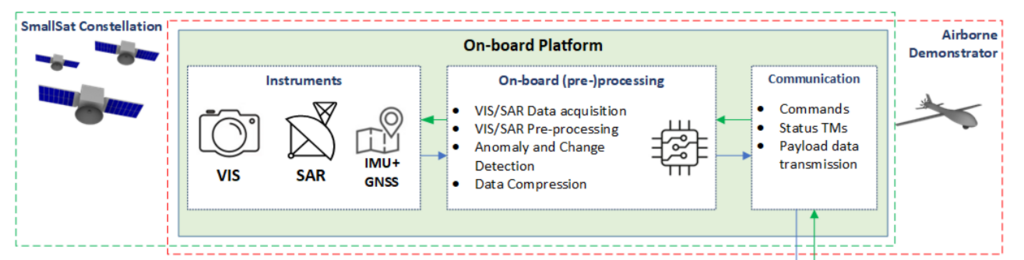
The airborne platform carries advanced sensors that capture images of the Earth’s surface:
- Radar sensors (SAR), which work in all weather conditions
- Optical cameras (VIS), which provide detailed visual images
Alongside these sensors, a powerful onboard computer processes the data in real time. Instead of sending large raw data files to the ground, the system analyzes the information during the flight and only sends the most relevant results.
Why is this important?
Sending raw data from an aircraft can be slow and inefficient. By processing data on board:
- Less data needs to be transmitted
- Results are available much faster
- Monitoring becomes more efficient and responsive
This is especially important for applications like railway infrastructure monitoring, where quick decisions can improve safety and reduce disruptions.
How does the system work?
The onboard system works like a team of small programs that communicate with each other. Each part has a specific role:
- Some collect data from sensors
- Others process and analyze it
- Some prepare the results for transmission
These components work together seamlessly, ensuring that data flows smoothly from collection to analysis.
Handling real-world challenges
During flight tests, the system used mobile network connections (similar to 4G/LTE) to transmit data. However, connectivity can sometimes be unreliable, especially in remote areas. To ensure reliability, the system can also operate in controlled environments using stable network connections.
Powerful computing in the air
The onboard system uses multiple computers working together:
- Some handle data directly from the sensors
- Others perform advanced analysis, such as detecting unusual patterns or potential issues
This setup ensures that even complex tasks can be completed quickly and efficiently.
Combining different data sources
One of the key strengths of the system is its ability to combine information from different sensors:
- Radar data provides reliable information in all conditions
- Optical images add detailed visual context
By combining these sources, the system can deliver more accurate and trustworthy results.
What are the benefits?
- Faster access to important information
- Reduced data transmission needs
- Reliable performance in different conditions
- Improved monitoring of infrastructure
- Better support for decision-making
Looking ahead
The onboard processing system demonstrates how advanced technologies can bring data analysis closer to where data is collected. This approach is a key step toward smarter, faster, and more efficient Earth Observation services in the future.